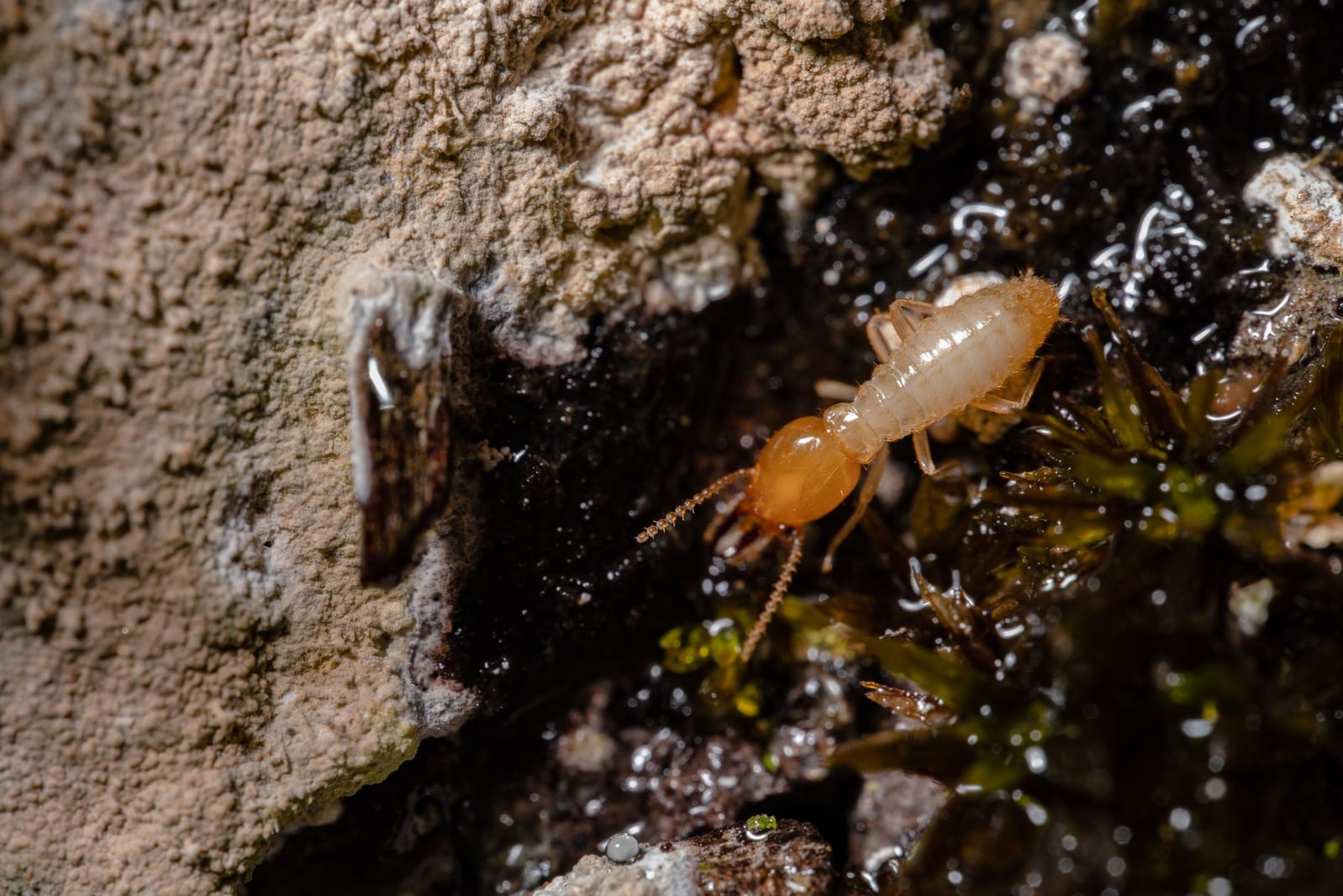
Subterranean termites cause more structural damage than fires and storms combined, and they work silently — by the time you see damage, a colony has often been active for years. In the New York area, termites threaten the wood framing, joists and sills of houses and the lower floors of older buildings.
We provide both proactive inspection — including the Wood-Destroying Insect (WDI) reports lenders require for home purchases — and active treatment using liquid soil barriers and in-ground baiting systems that intercept and eliminate the colony.
If you're buying or selling property in the NYC metro, a documented termite inspection protects the transaction; if you already suspect activity, early treatment limits the damage and cost.
Termites in New York City: what eastern subterranean termites are and how they're really controlled
The species threatening Northeast building stock is the eastern subterranean termite. Penn State Extension notes these termites often damage structural timbers in buildings, but the damage is slow: when it becomes evident it is usually the result of years of infestation, and termite problems generally appear only some years after construction — usually 10 years or more. (Penn State Extension — Eastern Subterranean Termites)
Subterranean termites live in the soil and need that moisture, reaching wood through mud "shelter tubes." Penn State Extension explains the termites build these earth-coloured tubes as a protected runway from the earth to the wood they feed on, that wood embedded in earth or in concrete cellar floors is especially susceptible, and that winged swarmers usually emerge between February and June. (Penn State Extension — Eastern Subterranean Termites)
Winged termite swarmers are routinely mistaken for flying ants. Penn State Extension gives the field test: an ant has a narrow, wasp-like waist while a termite has a broad waist; termite antennae are straight where an ant's are L-shaped; and a termite's four wings are all of equal length, unlike an ant's unequal fore and hind wings. Correct identification decides whether you have a termite problem at all. (Penn State Extension — Eastern Subterranean Termites)
There is no one-spray fix. The US EPA states the most common technique for treating termite infestations is the soil-applied barrier treatment, while newer bait systems rely on cellulose baits containing a slow-acting insecticide. The EPA cautions that termiticide application can only be properly performed by a trained pest-management professional, because many termiticides are highly toxic and demand label-precise equipment and method. (US EPA — Termites: How to Identify and Control Them)
Liquid soil barrier vs in-ground bait stations
| Liquid termiticide barrier | In-ground bait stations | |
|---|---|---|
| How it works | A continuous treated soil zone applied by professionals through trenching, drilling or rodding around the structure (UC IPM) | Cellulose bait stations set in the ground; foraging termites feed and carry the slow-acting active ingredient back toward the colony (US EPA) |
| Speed | Establishes a protective treated zone once applied | UC IPM: bait systems may take several months or even years to control the problem |
| Ongoing commitment | Periodic re-inspection; barrier integrity must be maintained | UC IPM: must be followed up with constant monitoring |
| Who should do it | UC IPM: methods are for professional use only | Professional install + monitoring; EPA: application only by a trained professional |
Signs you have a termite control problem
- Mud tubes running along foundations, walls, or crawl-space surfaces
- Wood that sounds hollow when tapped or crumbles easily
- Discarded wings near windowsills after a swarm
- Buckling paint or what looks like water damage on wood
Why Upper East Side sees this
Older NYC-area homes and brownstones with wood sills near grade are prime termite targets — we know where to look.
We turn WDI reports around quickly to keep real-estate closings on schedule.