Home pest control in Harlem: what to know
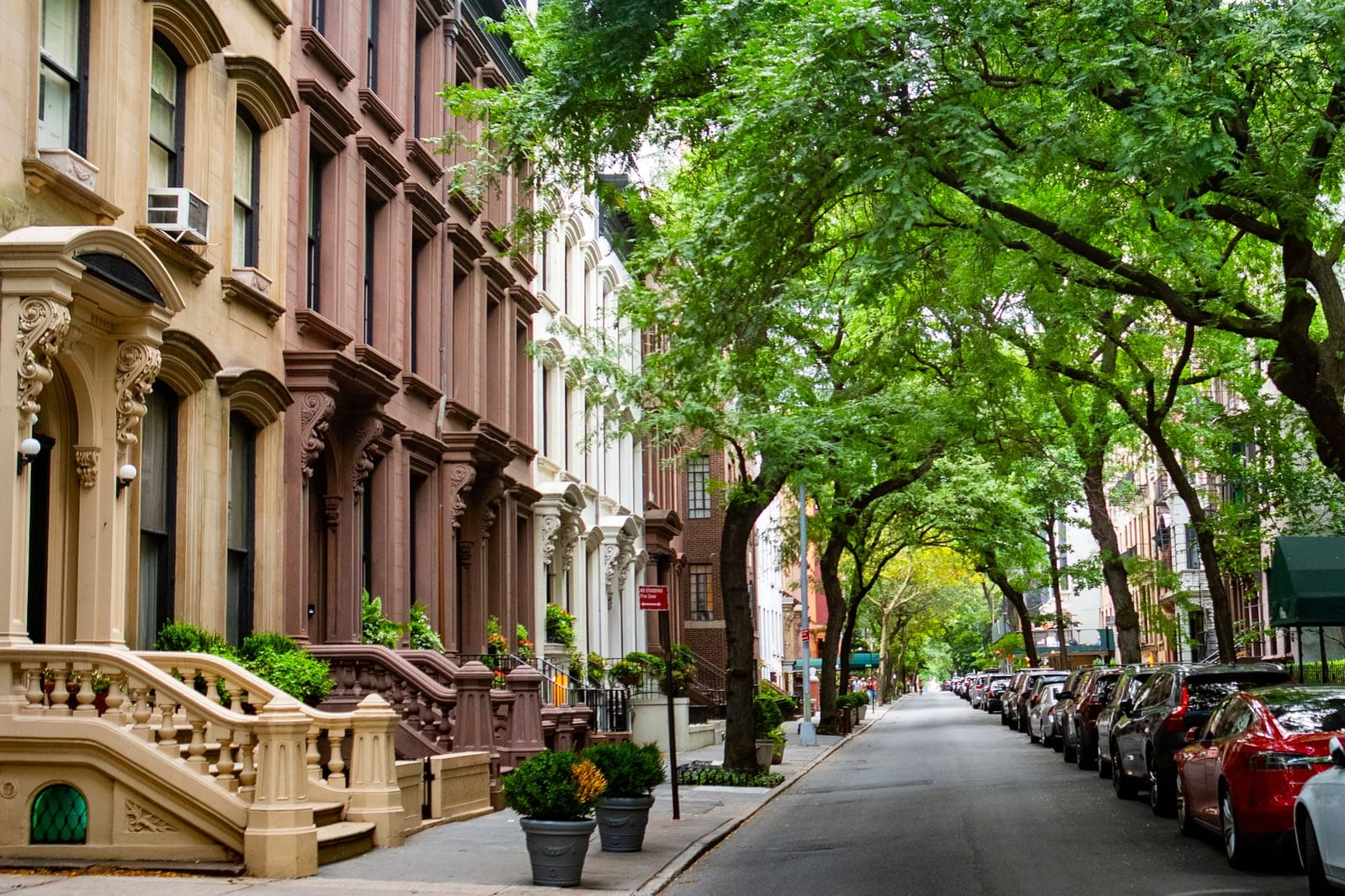
Harlem's housing is dominated by pre-war apartment buildings, historic brownstones and walk-ups — handsome buildings with deep baseboard gaps, shared wall voids and aging plumbing that let rodents and cockroaches travel freely between units.
The dense restaurant and retail corridor along 125th Street and Lenox Avenue creates constant food-source pressure that feeds rodent and roach populations into the surrounding residential blocks.
Brownstone conversions are especially prone to bed bug spread through shared walls and hallways, and to 'water bugs' rising through old shared plumbing from basements.
Harlem's green edges — Marcus Garvey Park, St. Nicholas Park and Morningside Park — drive the warm-season pressure residents search for most: ants foraging indoors from spring through autumn, spiders moving in around old window frames and basements, and mosquitoes breeding in standing water after summer rain. These are common in ground-floor, garden and brownstone-rear apartments backing onto the parks.
How much does residential pest control cost in Harlem?
$40–$900
One-time visit: $150–$500 (varies further by home size, e.g. $250–$450 at 1,000 sq ft up to $450–$750 at 3,000 sq ft). Monthly plan visit: $40–$70. Quarterly plan: $100–$300/visit or $400–$900/year. Initial/first visit under a plan often $150–$300 (sometimes waived on annual contracts).
| One-time visit | $150–$500 per visit |
| Monthly plan | $40–$70 per visit |
| Quarterly plan | $400–$900 per year |
US national figure — NYC typically runs higher.
NYC pest-control pricing tends to run higher in Manhattan than in Brooklyn or Queens — tier-2 NYC industry sources cite roughly a 10–20% premium, attributed to building-access logistics (walk-ups, elevators, doorman/board approval) and labour costs. This is directional signal from industry blogs, not an independently verified figure — confirm with a quote for your specific building.
Market range — not our quote
This is a market range synthesised from published cost guides — not a quote from this provider. The actual price depends on an in-person or photo-based inspection.
US national anchor (ThisOldHouse); direct fetch of Angi's NY-geo-targeted page returned HTTP 403 so its exact NYC figure could not be independently confirmed beyond search-snippet level — treated with extra caution.
What drives the price
- Plan type (one-time vs monthly vs quarterly vs annual contract)
- Home/apartment size
- Infestation severity (mild $100–$500, moderate $300–$700, severe $1,000–$8,000)
- Contract discount (annual contracts sometimes 10–15% below month-to-month)
Signs you need home pest control
- Live insects seen repeatedly in the same room or along the same path (kitchen, bathroom, basement)
- Small holes, frass, or shed skins near baseboards, window frames, or stored food
- A sudden seasonal increase in a specific insect (common with ants in spring, stink bugs in fall)
- Pests appearing in a pattern that suggests an entry point — near a specific pipe, vent, or gap in a foundation
- A new pest problem coinciding with construction, a neighbouring unit's infestation, or a recent move-in
How we treat home pest control in Harlem
Most calls we get for general residential service don't start with a confirmed diagnosis — a customer sees a few ants near the kitchen window, a moth in the pantry, or something moving along a baseboard at night, and isn't sure what they're actually dealing with. That's the right instinct. Correct identification is the first step of any pest job, because the treatment for pantry moths is nothing like the treatment for ants, and the treatment for ants depends on which species and where the colony is nesting. A licensed technician inspects before treating, not the other way around.
Residential pest control covers the common household pests that don't have their own dedicated program — ants, pantry and clothing moths, spiders, silverfish, centipedes, seasonal invaders like stink bugs or box elder bugs, and general occasional invaders that show up as buildings age or seasons change. Older housing stock in neighbourhoods like park-slope and carroll-gardens brings different pressure points — original wood trim, masonry foundations, and converted multi-unit brownstones all create entry points and harbourage that a newer building doesn't have — while high-rise apartments in midtown or the financial-district see more pests travelling through shared risers and HVAC chases than through the exterior.
Local landmarks & coverage
We serve all of Harlem and the surrounding Manhattan area — including Apollo Theater, 125th Street, Marcus Garvey Park, St. Nicholas Park, Morningside Park, Striver's Row, Lenox Avenue — across ZIP codes 10026, 10027, 10030, 10037, 10039.
