Skip to content
Mon–Fri & Sun: 8am–6pm · Closed Saturday
ES
Expert Exterminating Licensed NYC Exterminators

Wildlife & Squirrel Removal in NYC

Last updated: 12/06/2026

Expert Exterminating handles wildlife intrusions — raccoons, squirrels, and other nuisance wildlife — across all five boroughs since 2006, using licensed exclusion and humane trapping methods rather than poison, then sealing the entry point so the same animal (or the next one) can't get back in.

SquirrelsRaccoonsOpossumsExclusion / proofing

Get Your Free Quote

Or call now: (929) 566-8438

Licensed
& insured NY exterminators
4.9★
332 Google reviews
All 5 Boroughs
Neighbourhood-level NYC coverage
Guaranteed
We return until it's resolved
NY DEC License 15739

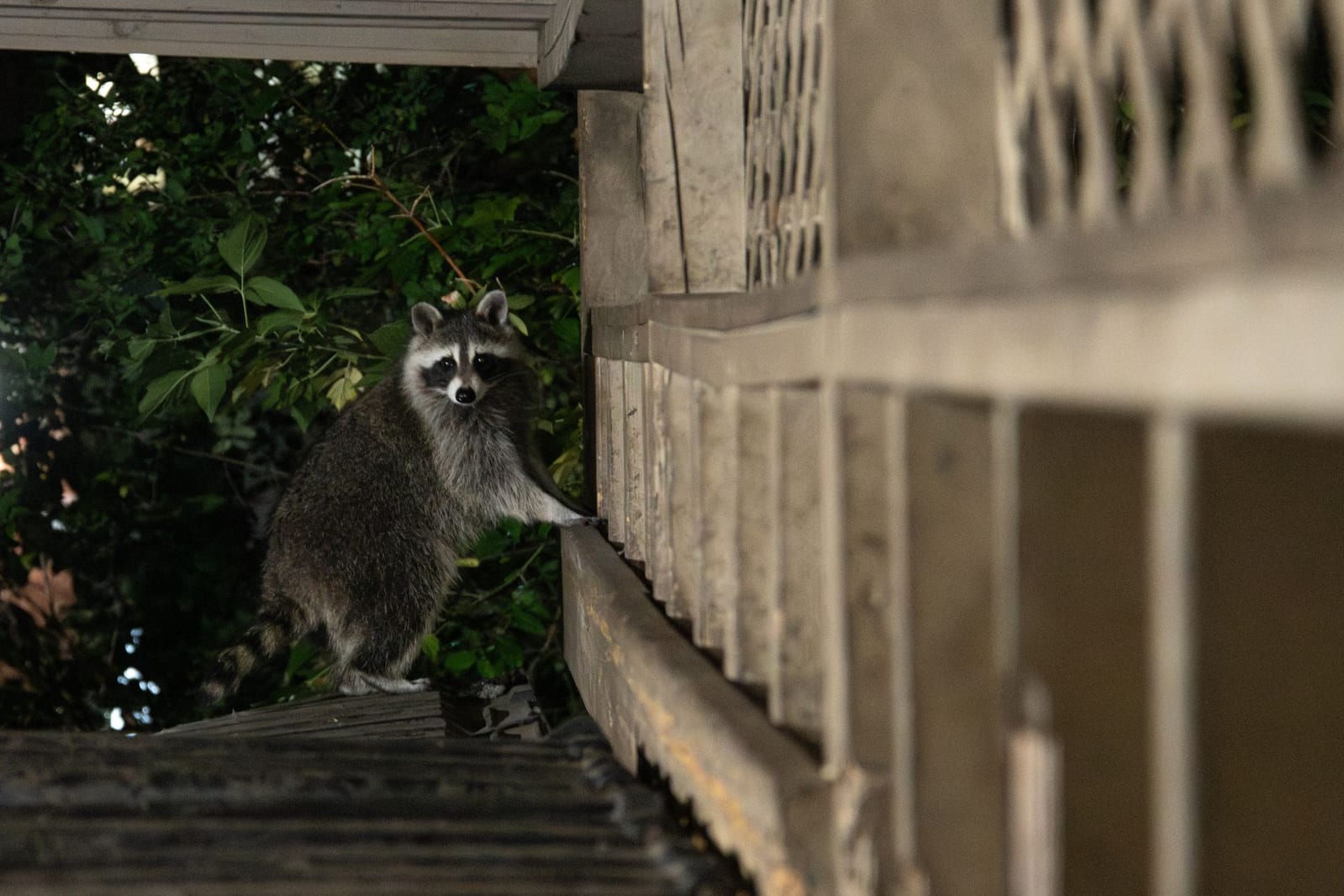
Wildlife calls are different from insect calls. Raccoons denning in a chimney, squirrels chewing into a soffit, or birds nesting above a cornice aren't pests in the textbook sense — they're wild animals that found an easy way into a warm, dry structure, and removing them correctly means more than setting a trap.

New York State regulates the handling of many nuisance wildlife species, which is why this work calls for a licensed operator rather than a general pest spray. Mike Jacoby and the Expert Exterminating team assess how the animal got in, remove it using humane methods, and — the step homeowners most often skip — seal and repair the entry point, because an open gap will simply invite the next animal in.

This work skews toward buildings with roof lines, chimneys, and yards rather than sealed high-rise apartments, so it's most common in detached and semi-detached homes and buildings backing onto trees or green space.

Getting wildlife out of an attic safely — what NYC homeowners should know

Per the CDC, raccoons and bats are the primary rabies-reservoir species in the eastern US — together they account for the majority of animals that expose Americans to rabies, and raccoons are an established reservoir along the entire Eastern seaboard. That is why grounded or daytime-active nuisance wildlife should never be handled directly and is a job for a trained operator. (CDC — Rabies in the United States)

The CDC notes raccoon roundworm (Baylisascaris) lives in raccoons and is shed in their droppings; people are infected by accidentally swallowing eggs from contaminated soil or surfaces, and although rare, infection can be severe when larvae invade the eye, organs or brain. So a raccoon latrine in an attic needs careful clean-up, not just animal removal. (CDC — About Raccoon Roundworm)

Penn State Extension stresses that trapping or evicting a nuisance animal only works long-term when paired with exclusion — sealing every foundation and structural opening — because an open structure is simply reoccupied by new animals. Removing denning sites and sealing entries is the durable fix, not removal alone. (Penn State Extension — Nuisance Wildlife Solutions)

Penn State Extension warns that bats must never be sealed out during the maternity season (late May to mid-July), because flightless pups would be trapped and die inside. Humane exclusion uses one-way devices timed for spring before bats arrive or late summer and fall after pups can fly, then entry points are permanently sealed. (Penn State Extension — Timing for Excluding Bats)

How much does wildlife & squirrel removal cost in NYC?

$150–$600

Squirrel removal: $200–$600 (typical $250–$450, avg ~$300). Raccoon removal: $300–$450 avg, or $150–$300 per animal for trap-and-release. Exclusion vent installation: $300–$450 each. One-way mesh exclusion barrier: $10–$25/linear foot.

Squirrel removal $200–$600 one-time
Raccoon removal $150–$450 one-time
Exclusion vent installation $300–$450 per vent

US national figure — NYC typically runs higher.

Market range — not our quote

This is a market range synthesised from published cost guides — not a quote from this provider. The actual price depends on an in-person or photo-based inspection.

US national — NYC typically higher. No NYC-specific wildlife-removal cost guide found despite NYC's well-documented raccoon/squirrel-in-building problem — a genuine gap versus the bed bug/rat/roach guides.

What drives the price

  • Species
  • Number of animals
  • Location (open yard vs attic/wall void)
  • Cleanup/repair needed after removal (droppings, insulation, entry-point damage)
Get an exact quote

Signs you have a wildlife removal problem

  • Scratching or thumping sounds in the attic, chimney, or wall voids, especially at dusk or dawn
  • Torn or pulled-back sections of roof soffit, fascia, or vent screening
  • Droppings or a strong urine odor concentrated in one area of an attic or crawlspace
  • Visible entry gaps around the roofline, chimney flashing, or foundation
  • An animal sighting on the property itself — on a fence line, roof, or near a shed

Why NYC sees this

Wildlife pressure in New York City isn't spread evenly — it concentrates in blocks with more tree cover, yards, and older roof lines, which is why we see more raccoon and squirrel calls in green-edge sections of the boroughs than in sealed mid-rise blocks. Since 2006, Expert Exterminating has handled these calls across all five boroughs, from detached homes near park-adjacent stretches of brooklyn to older buildings in upper-manhattan neighborhoods with mature street trees.

New York State regulates the handling of many nuisance wildlife species, and licence #15739 covers this work — it's a meaningful distinction from an unlicensed operator setting an ordinary trap, particularly when the animal in question is protected or requires species-specific handling.

Simple, transparent process

Our Wildlife & Squirrel Removal Process

  1. 1

    Inspection

    We check the roofline, chimney, soffits, foundation, and any outbuildings to find how the animal is getting in and out, not just where it's currently nesting.

  2. 2

    Identification

    Confirming the species matters — raccoons, squirrels, and birds each require different handling methods and, in some cases, different regulatory requirements.

  3. 3

    Humane removal

    We use licensed, humane trapping and exclusion methods appropriate to the species rather than poison, which is both riskier and less reliable for larger wildlife.

  4. 4

    Exclusion and sealing

    Once the animal is out, we seal the entry point with material the animal can't re-chew or pry open — this is the step that actually prevents a repeat call.

  5. 5

    Follow-up check

    A licensed technician confirms the space is clear and the exclusion work is holding before we close out the job.

Wildlife & Squirrel Removal — FAQs

How much does wildlife removal cost in NYC?

Market rates for wildlife removal in NYC typically run $150–$600, based on published cost guides (not this provider's quote). Squirrel removal: $200–$600 (typical $250–$450, avg ~$300). Raccoon removal: $300–$450 avg, or $150–$300 per animal for trap-and-release. Exclusion vent installation: $300–$450 each. One-way mesh exclusion barrier: $10–$25/linear foot. Actual price depends on an in-person or photo-based inspection.

Can I just trap and release the animal myself?

Handling of many nuisance wildlife species in New York is regulated, and DIY trapping often removes one animal without closing the entry point — so another one moves in within weeks. A licensed operator identifies the entry point and seals it as part of the job, which is what actually stops the problem.

Is it always raccoons and squirrels?

Those are the two most common calls we get in NYC's more tree-lined and low-rise blocks, but birds nesting above cornices or in vents are also common. Correct identification matters because the removal method differs by species.

Will you just kill the animal?

No — we use humane trapping and exclusion methods rather than poison, which is both more reliable and more appropriate for wildlife than for insects. The priority is getting the animal out and the entry point sealed, not extermination.

Need wildlife removal in NYC?

Licensed, insured, local NYC exterminators. Call to schedule.

Call Now Free Quote