Quick answer
Spider exterminator treatment in NYC typically costs $150–$300. Most jobs are a perimeter spray plus interior spot treatment. That said, spiders are largely indirect — they eat other insects — so the best spider control is eliminating the pest food supply. Sticky traps and a vacuum handle most spider situations without a professional call.
How much does a spider exterminator cost in NYC?
Spider treatment in NYC typically runs $150–$300 for a one-time visit. That’s a perimeter spray on the exterior of the building and targeted interior spot treatment at active web sites — corners, window frames, basement ceiling joints. It’s one of the lower-cost pest control services because spiders rarely require the multi-visit programs that rodents and bed bugs demand.
| Service | Typical range | Notes |
|---|---|---|
| One-time spider treatment | $150 – $300 | Perimeter + interior spot treatment |
| General pest control (treats spiders + food source) | $200 – $400 | More durable; addresses underlying insect population |
| Follow-up visit | $50 – $100 | Rarely needed for spiders specifically |
| Recurring plan (if overall pest pressure is high) | $50 – $80 / visit | Worth considering if insects are persistent |
Ranges as of 2026; vary by provider, unit size, and severity.
The honest picture: most NYC spider problems don’t need a pro
This is worth saying plainly because many people call an exterminator over a problem a broom solves.
DIY handles most situations:
- Sticky traps placed in corners, along baseboards, and near windows catch a significant number of spiders and tell you where the pressure is concentrated. A $10 multipack covers most apartments.
- Vacuuming — including webs, egg sacs, and any spiders directly — is immediate and effective. Dispose of the bag outside.
- Knocking webs down with a broom or brush removes the spider’s habitat. Cellar Spiders (the long-legged variety that congregates in ceiling corners) rarely re-establish in cleared areas if you keep at it.
Professional treatment is warranted when:
- You’re seeing large numbers in living areas, not just an occasional corner spider
- A Black Widow is possible and hasn’t been ruled out (have it confirmed before paying for treatment)
- A heavy infestation persists after several weeks of consistent DIY
- Multiple species are present and a building-level insect population is driving spider pressure
If you call and book a $200 treatment for the Wolf Spider you found in your basement, you’ve likely spent money on a problem that didn’t need it. Know the species first.
NYC spiders: which species are you actually dealing with?
NYC has a predictable roster of common spiders. Getting the identification right matters — it changes whether you do anything at all.
Commonly found, essentially harmless:
- Yellow Sac Spider — the most common bite in NYC. Small, pale yellow-white, often found on walls and ceilings. Bites if trapped against skin but the wound is mild and rarely requires medical attention.
- Cellar Spider (daddy long-legs) — the long-legged spider massing in ceiling corners of basements and garages. Completely harmless. More of a nuisance than a problem.
- American House Spider — builds the messy cobwebs in corners. Harmless, not aggressive.
- Jumping Spider — tiny, compact, sometimes metallic. Commonly seen near windows. Entirely harmless and, depending on your tolerance, interesting to watch.
- Wolf Spider — large, brown, often found in basements and lower floors. Alarming in size, but harmless. Frequently misidentified as a Brown Recluse in NYC.
The one species of concern:
- Black Widow — rare in NYC but present. Found in dark, undisturbed spaces: garages, woodpiles, utility areas, corners of sheds. Identifiable by the red hourglass marking on the underside of the female’s glossy black abdomen. If you genuinely suspect a Black Widow, photograph it before disturbing anything and call a professional to confirm.
What you won’t find:
- Brown Recluse — not native to NYC. Nearly every “brown recluse” identified by NYC residents is a Wolf Spider or another large brown spider. The Brown Recluse range does not extend into the Northeast. It can occasionally arrive in cardboard or shipped goods from the South or Midwest, but an established population in a NYC building is effectively unheard of. Don’t pay for a Brown Recluse treatment based on a guess.
Why spiders are an indirect problem — and why that changes the solution
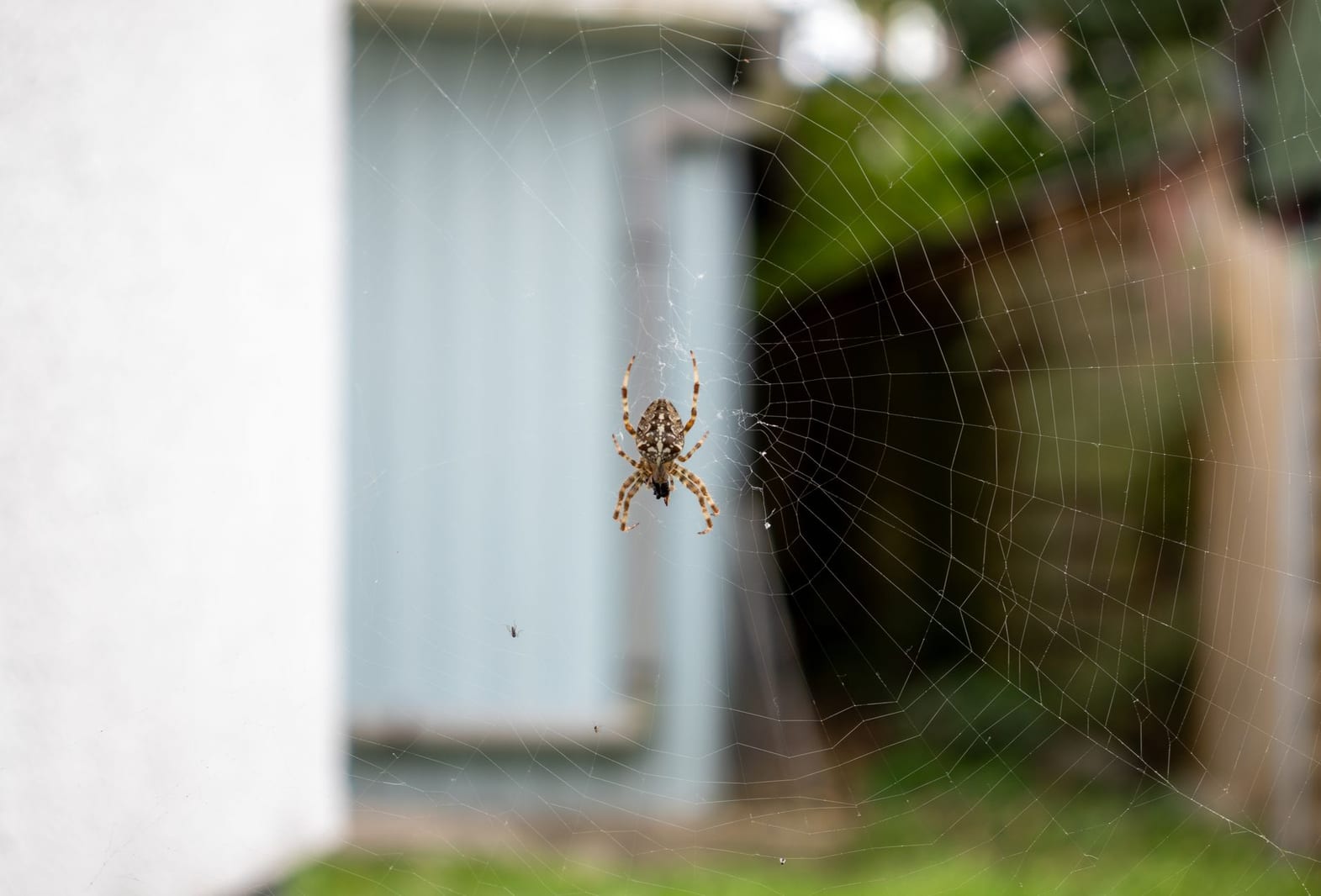
Spiders are predators. They eat insects. Every spider in your apartment is there because there’s something for it to eat — fungus gnats from overwatered plants, drain flies from a slow drain, fruit flies from aging produce, small moths, or the ambient insect population that comes with any older NYC building.
This has a direct implication for treatment: a perimeter spray for spiders without addressing the underlying insect population is a surface fix. The spray reduces the current spider presence. A new population establishes within weeks if the food source remains. That’s why general pest control — treating the insect population the spiders are feeding on — is often the more durable approach, and why many pest control companies will recommend it when you call about spiders.
If your building has persistent fungus gnats, drain flies, or a chronic general-insect issue, fix that first. The spiders follow.
When does spider treatment make sense in NYC buildings?
Apartments: The most common scenario — a spike in web-building species (Cellar Spiders, American House Spiders) in basement storage or corners. This almost always resolves with a broom and sticky traps. If the building has a chronic insect problem and spiders are concentrated throughout the apartment in living areas, a service call makes sense.
Brownstones and row houses: Cellar Spiders in the basement and Wolf Spiders coming in through foundation gaps are typical. The gap-sealing work (caulk, door sweeps, weather stripping) is more durable than any spray — spiders enter the same way insects do. If you’re already treating for other pests, ask to have spider treatment bundled.
Detached houses (Queens, Staten Island, the Bronx): Greater exterior perimeter exposure means more spider activity. A perimeter spray in late spring, before populations peak, is reasonable as part of a broader pest control program. Garages and crawl spaces are where Black Widow caution is relevant — those are worth a look before you start stacking cardboard in the corner.
Commercial properties: Food-service venues with fly pressure will always have spider activity. Address the fly issue first. Spiders in a restaurant aren’t the primary compliance problem — the flies they’re eating are.
Getting a fair quote for spider treatment in NYC
If you decide to call, have this information ready:
- Where you’re seeing them — basement, kitchen ceiling, bedroom walls, outdoor window frames
- Species if known — or a photo on your phone
- How many — occasional singletons, or webs in every corner of multiple rooms
- Building type — apartment, brownstone, detached house
- What you’ve already tried — if you’ve sprayed repellent, say so; it affects treatment approach
- Other pest issues — fungus gnats, drain flies, general insect activity
Ask specifically whether the treatment is spider-targeted or whether they’ll address the broader insect population. If you’re paying $200+ for a one-time visit, understanding what you’re getting prevents the frustration of the same problem returning in six weeks.
Compare spider treatment against the broader NYC pest control picture in our full exterminator cost guide, or book a service through our spider control page.